Find the Big AI Idea. Then Build It.I Find the Big AI Idea in Your Business. Then I Build It.

Darryl Mack
Software Architect & Engineer
Everyone has access to the same AI tools. It's what you do with them that matters. I find the right AI to build for your business — then architect it, build it, and launch it with your team.
Darryl Mack
Software Architect & Engineer
The opportunity is real.
So is the wall.
AI can build things your product couldn't do before — turning the data you already have into features your competitors can't easily replicate. That's the opportunity, and it's bigger than most roadmaps admit.
But it isn't free. The first phase of AI adoption feels like acceleration — prototypes overnight, demos that impress. The second feels like drag: a generated abstraction is locally correct but doesn't fit the system, every engineer's code diverges, and what flew in week one stalls by week three. The team isn't the problem. The tools aren't the problem. The missing architecture is. AI doesn't remove the need for it — it raises the cost of not having one.
of AI pilots never deliver measurable ROI (MIT)
The teams capturing the opportunity aren't the ones with the best prompts — they're the ones who defined the architecture first. Get the sequence right — Architecture Before Prompting — and the wall never shows up.
That sequence is the method. Here's how it runs.
Architecture Before Prompting
AI tools are powerful — and without the right architecture, that power produces fast prototypes that fall apart under real conditions. I design the foundation first, then build on top of it. This isn't theoretical: I'm in Claude Code every day, I've shipped AI products, and I've hit the same walls your team is hitting — then built the approach that prevents them.
Strategy and Architecture. Connected
Most AI initiatives fail not because the technology is wrong, but because the product strategy was never wired to the software architecture. I handle both sides — where AI creates real business value, and the architecture that makes sure it actually ships.
Architecture Before Prompting
Data model, coding standards, component patterns, API contracts — the foundation every AI tool builds on. Define it first and AI produces coherent, production-grade code instead of a patchwork of conflicting patterns.
I build it, not just advise it
You get a practitioner, not a deck. I design the architecture and build the pilot myself, then hand off a system your team uses daily — velocity they own, not rent.
One engagement. Four phases.
Idea
A deep dive into your business, your systems, and where AI actually fits — and we define what success looks like before any code is written.
Architecture
Design the data model, API contracts, coding standards, and component patterns. Every decision documented with its rationale — the context the AI tools build inside.
AI Build
Build a validated slice of the system on the architecture I designed. Bad assumptions surface here, in week three — not six months into production.
Launched
Your team gets the architecture, the standards, and the working code. I walk them through the system and make sure the handoff is real — velocity they own.
Start where you are.
The same method runs on all three. The difference is where you're starting from.
Find out where you stand.
A free assessment across the four things that decide if your AI product ships: your idea, your architecture, your data, and your delivery system. Get your score and where to start.
If you know AI belongs in your product, but not what to build first.
In three weeks I work on your business and hand back the Big AI Idea, the gaps standing in the way, and a roadmap to build it.
If you're ready to build, want the right way to do it, and a handoff your team can run with.
Ten weeks with your team in the room, from Idea to a launched product — built alongside the people who'll own it.
The Method. Shipped.
Industrial Scientific
87.5% less boilerplate · 100% pattern consistency
Gas-detection and worker-safety monitoring used by field workers, safety managers, and admins across industrial environments. Built three foundational systems the engineering team builds on: a Zustand-based global state for device data, fleet status, and alarms; global error handling with recovery flows; and a Tailwind-based UI component library.
Audacy
40% faster delivery
A streaming-audio platform serving millions of listeners. Introduced C4 architecture modeling to an engineering team shipping without a shared architectural language — giving product and engineering a common vocabulary for system design.
Idea Genius
Idea to investor-ready
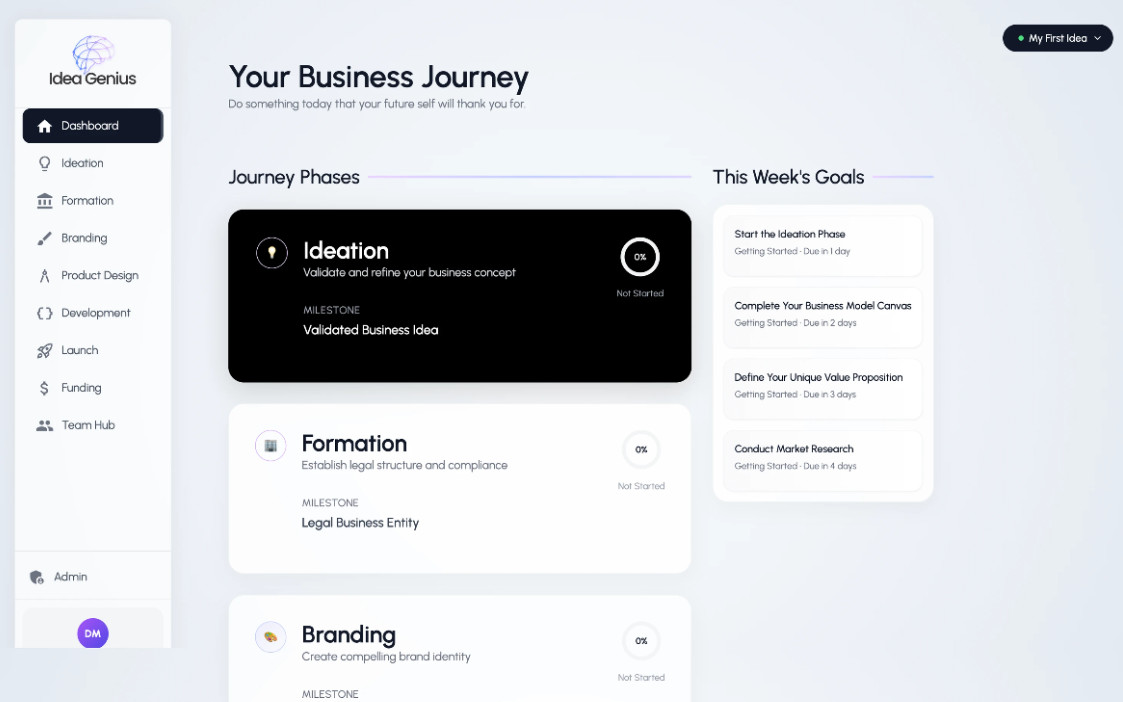
An AI-powered startup development platform that guides entrepreneurs from concept through launch. A multi-step RAG pipeline threads context across 40+ steps, each one building on every decision before it.
Full Answer
Three engines. One search.
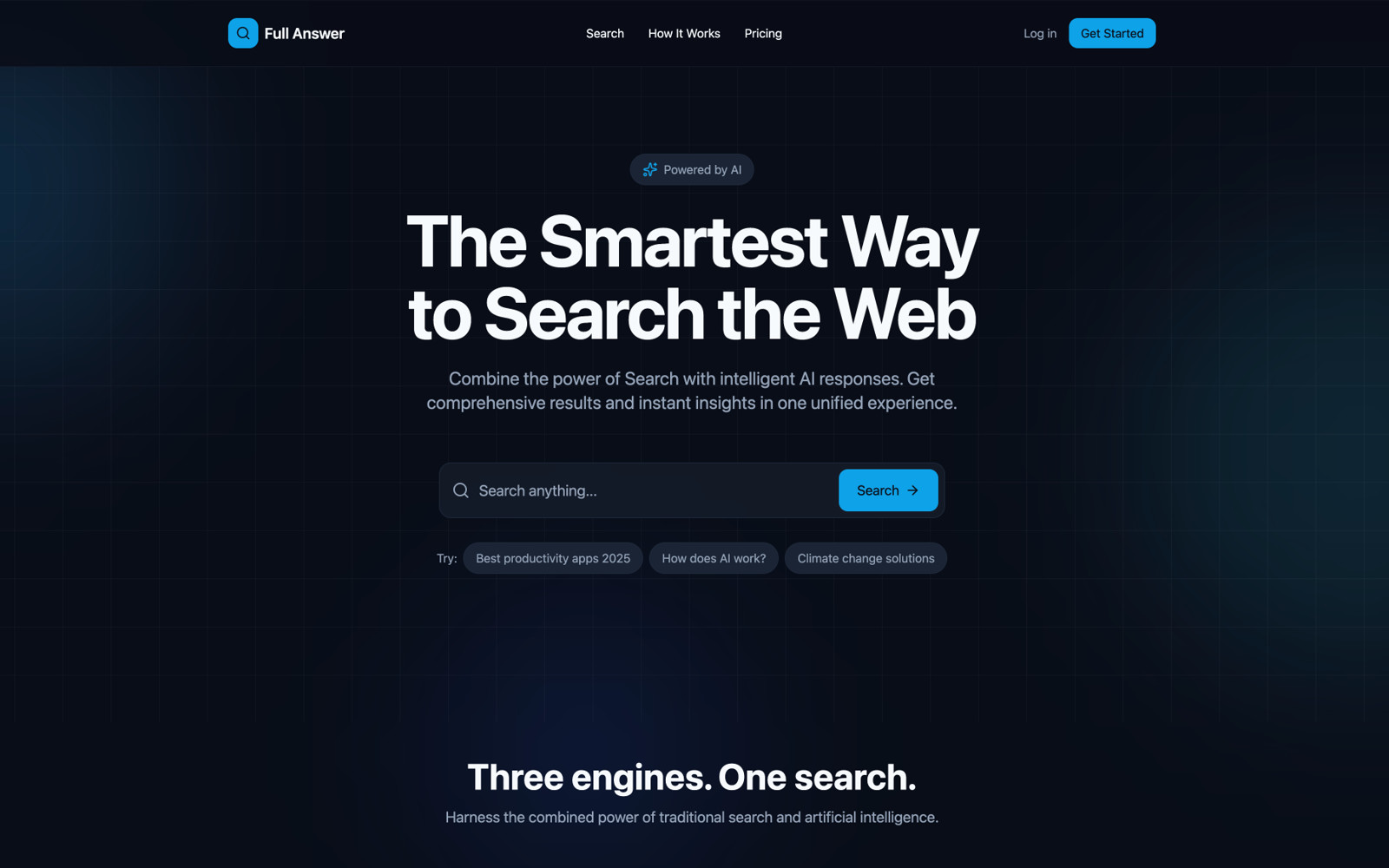
AI-enhanced search with persistent context. Unlike standard AI search that forgets everything between queries, Full Answer maintains the thread of thought across queries for a more coherent, accurate experience.
Production Genius
The whole production, in one place.
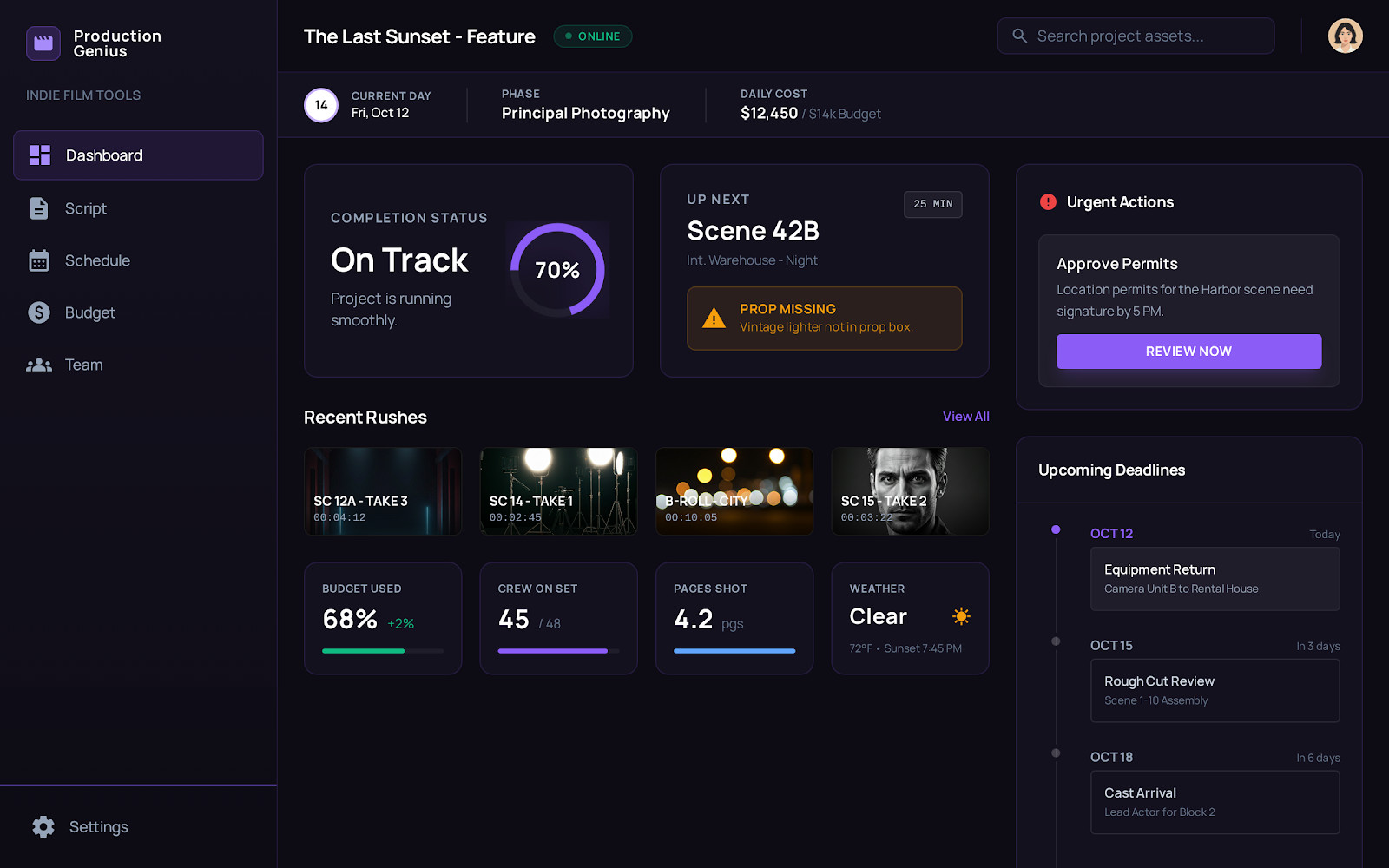
Film and video production management for content teams — scripts, media assets, cast and crew, scheduling, and deliverables across the full production lifecycle, on the shared Next.js/Firebase architecture that powers the portfolio.
Crew Genius
Coverage, sorted.
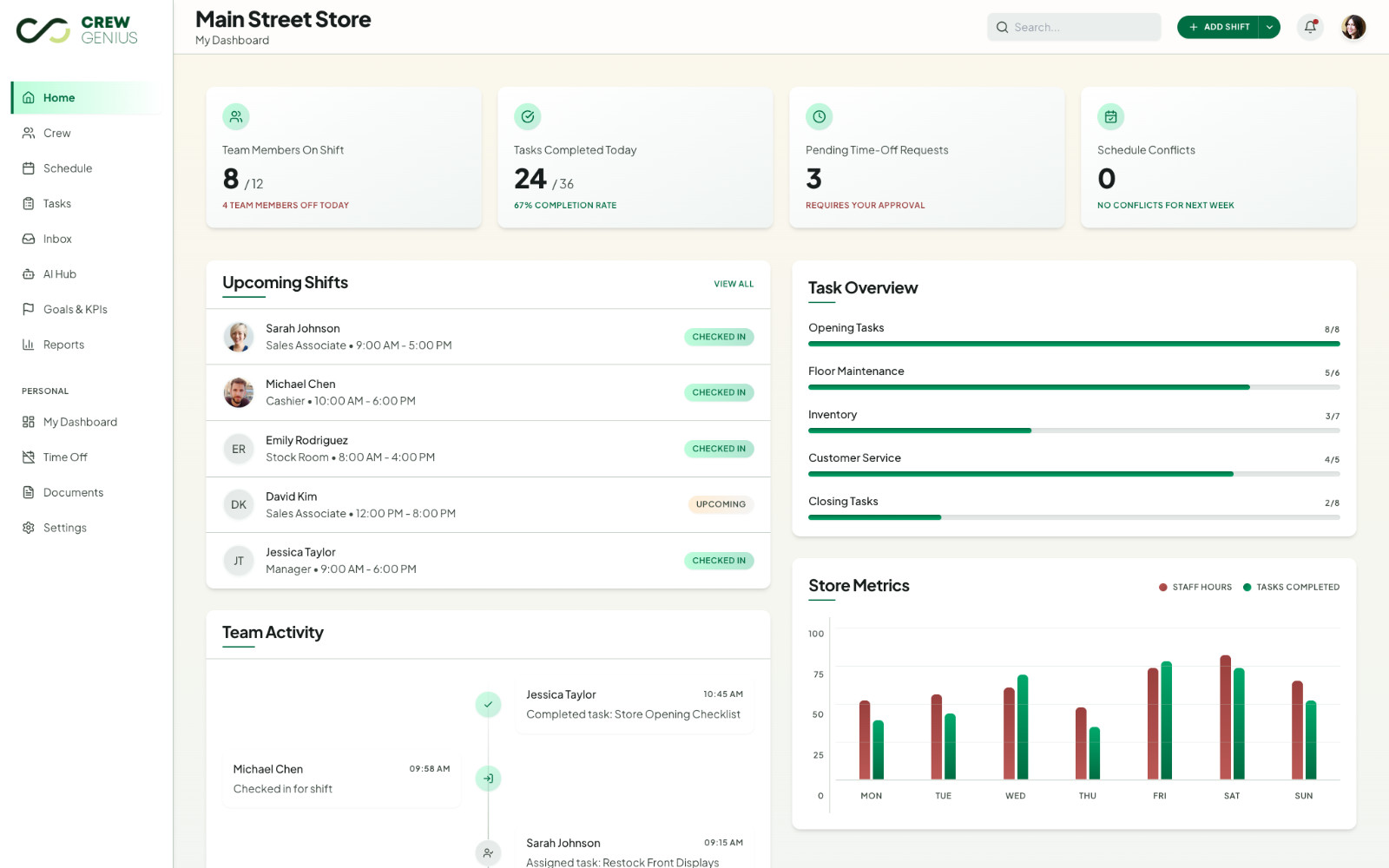
Design-first workforce management for retail and hospitality, built crew-first — people, availability, and coverage gaps before shifts. Consolidates crew information into a single person detail page, on the shared template architecture behind a family of SaaS products.
This is for you if —
- 01
You’re a CTO or VP of Engineering/Product at a company that builds a lot of software — roughly 100–500 people. (Software-product or not: media, industrial, finance, healthcare all count.)
- 02
You know AI belongs in your product — you’re just not sure what to build first, or how to build it so it still holds in six months.
- 03
Your engineers are strong. They don’t need more developers — they need the right thing to build and the architecture to build it right.
- 04
You’d rather build the right new thing than patch a broken pilot.
Just getting started on a brand-new venture? Idea Genius might be the better fit.
Ready to find and build your Big AI Idea?
A 30-minute Discovery Call tells us both whether this is a fit. No pitch — an honest look at where you are and what would actually help.